
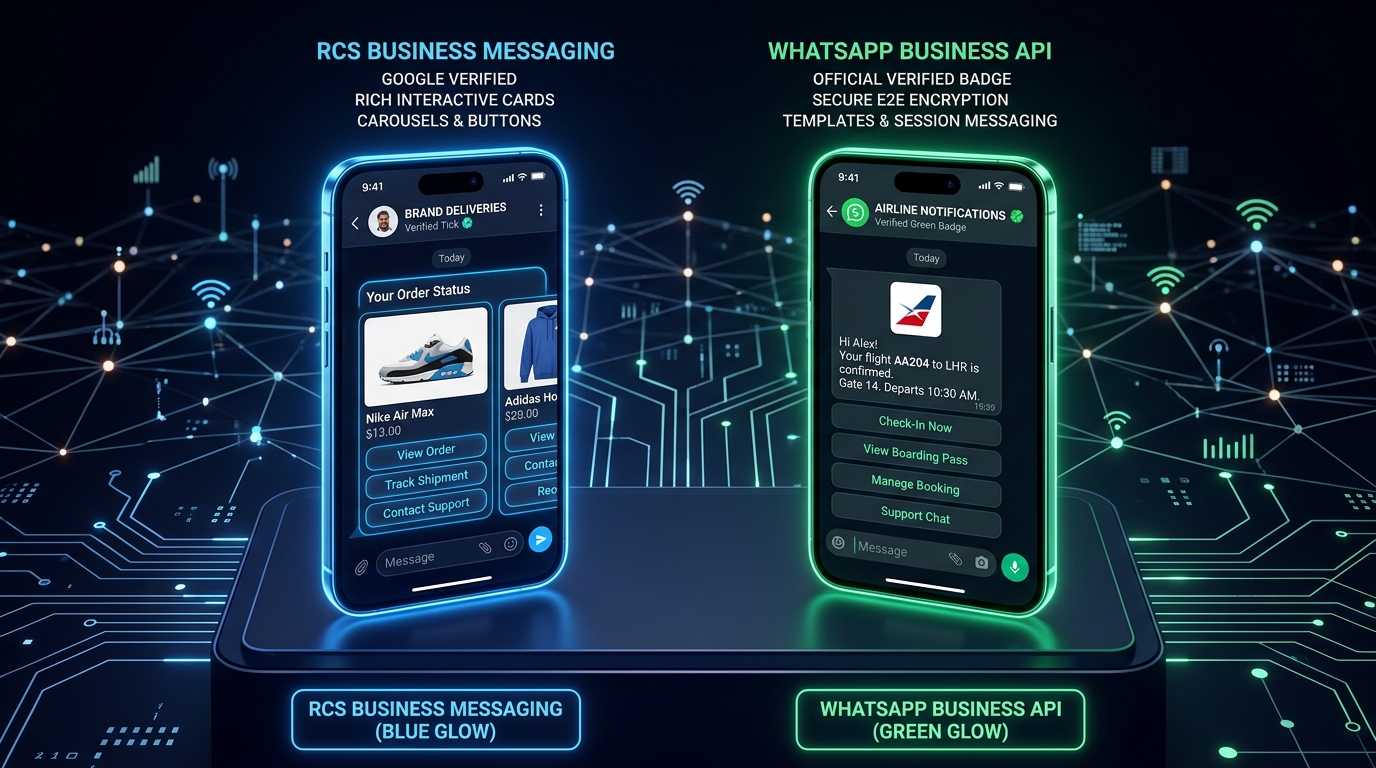
Indian enterprises are experiencing a profound transition from legacy SMS text messaging to rich, conversational formats. The two dominant champions in this space are WhatsApp Business API and Google-backed RCS (Rich Communication Services) Messaging.
While both channels offer verified sender checkmarks, carousels, action buttons, and end-to-end security, their commercial models, device distributions, and delivery protocols differ significantly.
1. The Shifting Landscape of Business Messaging in India
With telecom regulatory bodies (TRAI) enforcing strict scrubbing on promotional Bulk SMS, click-through rates on plain text links have dropped below 4%. In contrast, rich interactive channels routinely deliver over 45% engagement rates and up to 98% open rates.
2. User Reach & Device Availability
Understanding your target audience's device demographics is the key to channel selection:
- WhatsApp Business API: Reaches over 530 million active users in India across both Android and iOS devices. Requires users to install and maintain the WhatsApp application.
- RCS Messaging: Native to the default "Messages by Google" app pre-installed on Android devices. With Android capturing over 95% of India's smartphone market, RCS works directly out of the box without requiring any app download or sign-up.
3. Interactive Feature Matrix
| Feature Dimension | WhatsApp Business API | RCS Rich Messaging |
|---|---|---|
| Brand Verification | Official Green Tick (requires business verification) | Verified Sender Shield with brand logo & color header |
| Rich Carousels | Supported (up to 10 cards with CTA buttons) | Supported (horizontal scrollable cards with quick dials) |
| Fallback Mechanism | Requires separate API trigger to SMS / Voice | Native Carrier Fallback: Automatically downgrades to SMS if offline |
| 2-Way Conversational Bots | Extremely rich, multi-turn AI chatbot capabilities | Supported via Google Dialogflow & REST webhooks |
| iOS (iPhone) Support | Universal (high adoption on iOS) | Rolling out via iOS 18 (expanding in 2026) |
4. Cost Structure: Session vs Per-Message Pricing
Cost efficiency varies dramatically based on your messaging volume and use case:
WhatsApp API operates on a conversation-based model divided into 4 categories: Authentication, Utility, Marketing, and Service. Conversations are billed per 24-hour window, which is extremely cost-effective for multi-turn support dialogues.
RCS Messaging is typically billed per submitted rich message or event through Indian telecom operators (Jio, Airtel, Vi). For standalone broadcasts (e.g. promotional product launches or shipping updates), RCS often provides a lower cost-per-impression than Meta marketing conversations.
5. Security, DLT Compliance & DPDP Act Alignment
Both platforms satisfy modern Indian data governance criteria:
WhatsApp Security
End-to-end encrypted protocol with Meta Cloud API hosted in ISO 27001 certified data centers. Supports ephemeral OTP tokens.
RCS Security & TRAI DLT
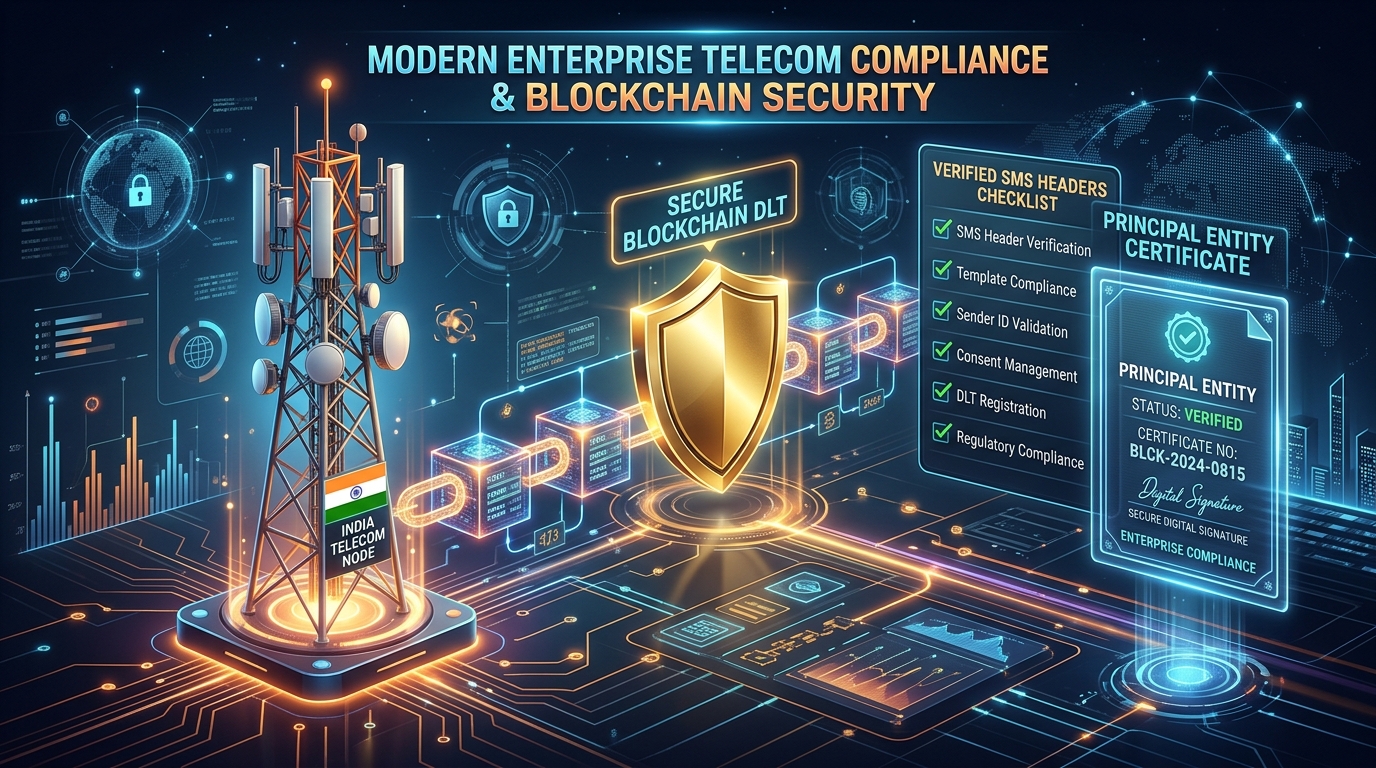
Direct carrier routing compliant with Indian telecom data sovereignty rules and Digital Personal Data Protection (DPDP) Act 2023.
6. Which Channel Should Your Enterprise Choose?
Leading CPaaS architects recommend a hybrid omnichannel strategy rather than treating them as competitors:
- Deploy WhatsApp Business API for 2-way customer care, AI support chatbots, interactive lead qualification, and order updates.
- Deploy RCS Messaging for high-volume marketing announcements, promotional carousels, and time-critical billing reminders with automatic SMS fallback.
Build an Omnichannel CPaaS Architecture
CPaaS Technologies lets you manage WhatsApp Business API, RCS, and Bulk SMS from a unified single REST API endpoint with automatic smart fallback.
Schedule an Architecture Session →